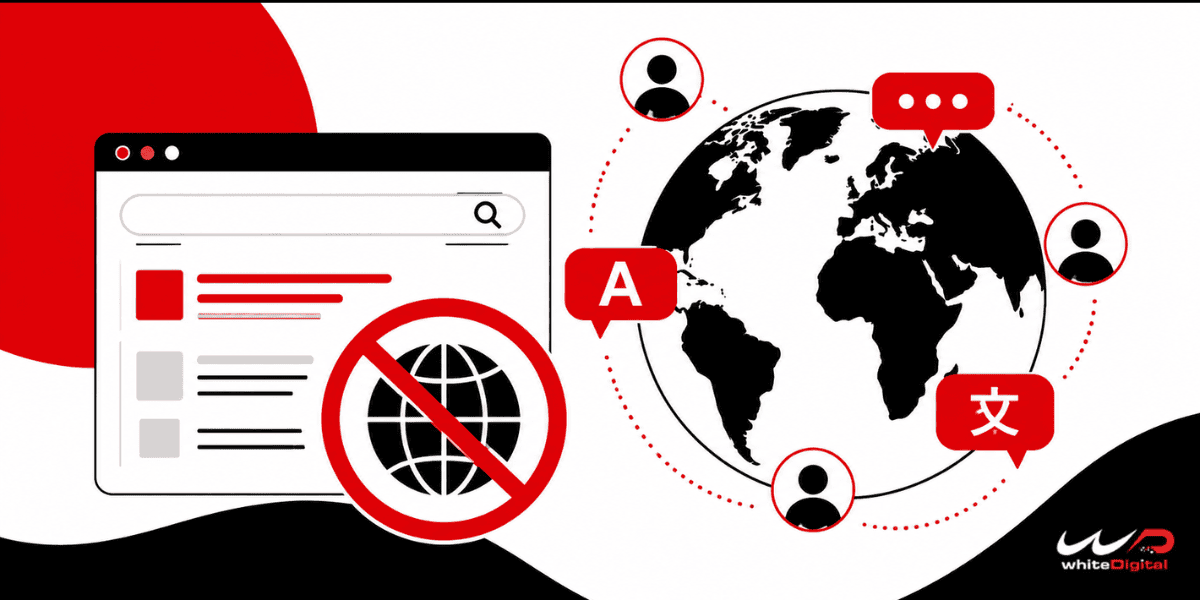
Google Ads has made changes to how language targeting is done in Search campaigns. In particular, the campaign-level language targeting is due to be retired by the end of September 2026. The change is going to affect both standard Search campaigns and AI Max for Search campaigns, where language targeting will shift from being controlled by the advertiser to automatic matching by Google.
Before, advertisers could set up their campaign languages in order to control eligibility for serving ads to certain users. This option was especially beneficial to advertisers running their multilingual campaigns separately.
Now, advertisers will have to forget about choosing campaign languages for Google Search. Instead, Google will make decisions about what ads are eligible based on the language of the ad and the languages understood by the user.
According to Google, such a change will help streamline campaign settings and maintain the same quality of the ad experience. At the same time, it is yet another step toward reducing the number of manual controls in Google Ads. In future, advertisers will have to rely even more on campaign structure, ad creative, landing page languages, and Google’s algorithms.
Google’s Strategy to Match Ads with Users
In the new strategy, Google will use various language eligibility signals to match users rather than the language at the campaign level. The language of the search query will be a signal, while the language setting of the user and other language relevancy indicators will also affect the process. In this way, the language of the Google interface of a user will not define the language of the received advertisement.
For instance, a user may have Spanish browser and account language settings but regularly make searches in English. Thus, the English language advertisement can be considered relevant for such a user. This contrasts with the rule according to which ads are limited to the selected language of the campaign or ad group.
If there are several eligible campaigns, Google assures that AI-based ad group prioritization will select the most relevant ad based on the context, language preferences included. Consequently, ad-level language signals will become more significant.
What happens to Performance Max Campaigns
The Performance Max campaign is also impacted, but it is not identical to the change in the Search campaign. With ads delivered via the Google Search channel in Performance Max, the language-level targeting that was set at the campaign level is now replaced by language matching in a similar fashion to a standard Search campaign, where Google applies the language of the ad and its signals.
Advertisers are not losing their ability to use the language-level targeting in Performance Max. The chosen languages would continue to impact delivery on other Performance Max channels such as YouTube, Display, Discover, and Gmail. There will be no changes to Shopping ads in the Performance Max campaign.
For marketers who use cross-channel campaigns, this means that the language-level targeting that was impacting delivery on Search will continue to impact the delivery of ads on other Performance Max channels. It is important to consider this difference because of the change being implemented.
Advertisers managing multilingual Performance Max campaigns should therefore review asset groups, creative language, landing pages, and campaign objectives before the September rollout to ensure their campaigns remain properly structured.
What Advertisers Need to Do before the Change
According to Google, the existing Search advertising campaigns don’t need immediate action; however, advertisers must ensure that they review their account structure before the rollout at the end of September. The most important thing that has to be done is to examine multilingual campaigns and see where language targeting has been strategically applied.
Start with auditing campaign groups and structure. If a separate campaign has been created only because it is targeting a different language, then it is necessary to examine how the ads, keywords, landing pages and conversion goals reflect the language difference. Consolidation is possible on some accounts, but it should not be seen as automatic.
The next step is to review ads. Google will pay more attention to the language of the ads in future, meaning that each language version of the ad must be written and use the same wording. Pages of the site have to match the language specified in the ad.
There is also a necessity for advertisers to set the performance baseline prior to implementing the changes. Advertising campaigns must record impressions, clicks, conversion rate, cost per conversion and share the conversion value by language.
Finally, review automated workflows and account-management processes. Teams using scripts, bulk tools, or campaign templates should ensure they do not depend on language criteria for newly created Search campaigns.
Why should advertisers be concerned?
The biggest question for advertisers is whether they will have more or less control over multilingual campaigns.
There are some benefits to this step. A user who is bilingual will be able to see relevant ads that would otherwise be blocked due to campaign language settings.
On the other hand, this may lead not only to less accurate targeting, but also to inefficient and unpredictable delivery, especially in the markets where it is common for customers to query in several languages.
This update suggests that Google is shifting towards machine learning technologies and using fewer manual controls, making the multidimensional advertising landscape significantly more important for multilingual advertisers.
Coming to an end, this doesn’t mean language targeting is going to disappear from search campaigns, but manually choosing language is. Google is taking greater responsibility for determining language relevance at auction time.