
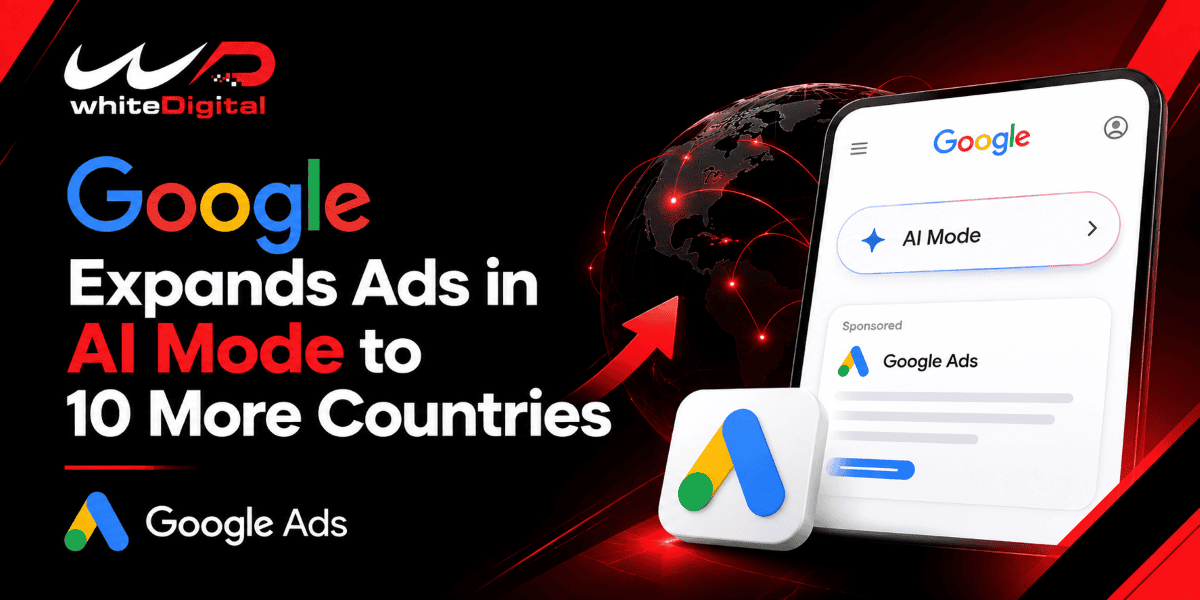
Google is adding advertising to AI‑powered search experiences. On October 28, 2026, Google said that ads in Google Search for typing a short keyword and opening several AI Mode will reach 10 countries, such as India, Australia, Canada, and Singapore.
The change reflects how people are starting to use Google Search. Instead of typing a quick keyword and opening many websites, users can ask detailed questions, compare options, and keep talking to find what fits their needs.
For advertisers, this is another chance to reach customers while they research products and services.
Which Countries Now Support Google AI Mode Ads?
Google announced that it is expanding ads in AI Mode to these 10 countries.
- Australia
- Canada
- India
- Kenya
- Malaysia
- New Zealand
- Nigeria
- Pakistan
- Philippines
- Singapore
Google also said that it will expand ads in AI Mode to markets in the fourth quarter of 2026, such as Brazil, Mexico and the United Kingdom.
For businesses in India and other new markets, this is worth watching because Google is creating ways to show relevant advertising in AI‑powered search. Availability can differ by market and ad format, so advertisers should read Google’s eligibility guidance before deciding on a campaign.
How Google Ads Appear in AI Mode
AI Mode lets people explore a topic in a search. They can ask a question, read Google’s answer, and ask questions to narrow their choices.
For example, someone might search for ways to improve a business website. They could then ask which SEO services would help, compare providers, and look for pricing or service details.
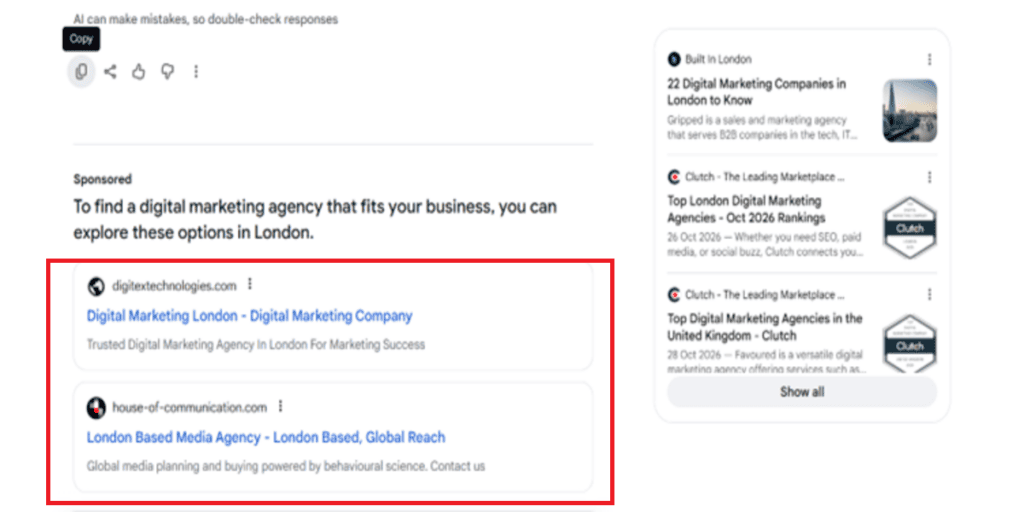
When a conversation has commercial relevance, Google can show ads within or alongside its AI-generated responses. These ads are clearly labelled “Sponsored” so users can distinguish them from organic information.
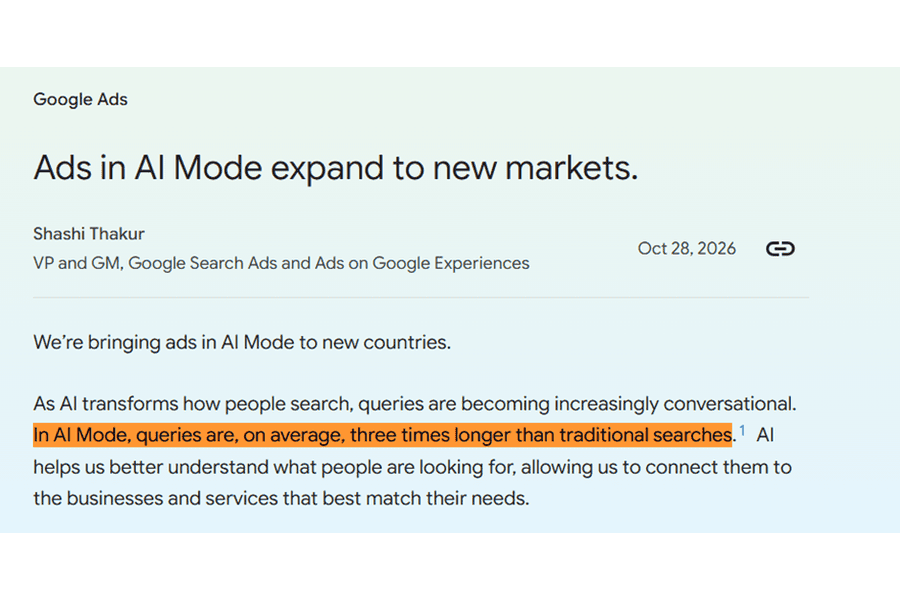
Google says AI Mode queries are, on average, three times longer than traditional searches. This suggests that advertisers may need to consider more than short, product-focused keywords when thinking about how their campaigns reach potential customers.
However, a longer conversation does not automatically mean a user is ready to buy. Advertisers still need to understand which queries generate meaningful visits, leads, and sales.
Google Introduces AI Mode Ads in Follow-Up Questions
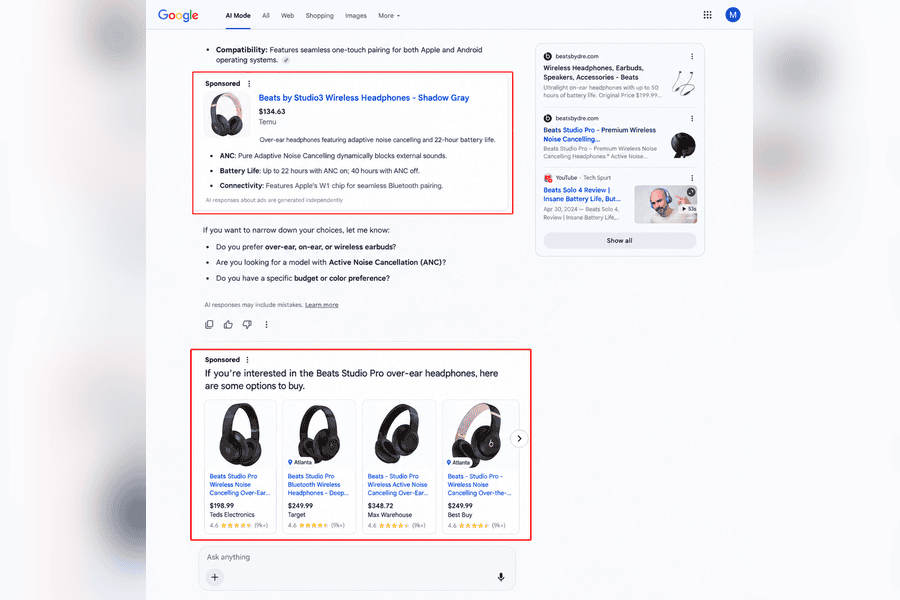
Another part of the announcement is the launch of multi-turn ads in AI Mode in the United States.
In a traditional search journey, someone might search for a product, click an ad, return to Google, and then search again to compare alternatives. In AI Mode, the user can continue asking questions within the same conversation.
With multiturn ads, Google is introducing the ability for ads to appear during these follow-up queries. This gives advertising opportunities a place in a longer research journey rather than only at the initial search.
For advertisers, the key question is whether these placements help reach audiences at the right moment in the decision process. Results will depend on the user’s needs, how relevant the ad is, and the quality of the offer and landing page.
Do Advertisers Need to Create a New Campaign?
Google’s current Ads Help says advertisers do not need campaigns or budgets just for AI Mode placements.
Existing Search, Shopping, and Performance Max campaigns that are eligible can join Google’s advertising auction when it matters. Which ads appear depends on the user’s query, campaign eligibility, targeting, and available placements.
This means advertisers should not think they need a campaign just to be eligible for these experiences. Instead, they should check their campaign setup and ensure targeting, ad assets, landing pages, and conversion tracking are solid.
Google also explains that ads in AI Mode use the same auction and billing models as standard search ads. There is no additional charge simply for participating in these placements.
What Should Advertisers Review Now?
With AI Mode ads expanding to more markets, advertisers can take a few practical steps to prepare.
Review campaign targeting. Check whether your Search, Shopping, or Performance Max campaigns are eligible and whether your targeting matches the customers you want to reach.
Improve ad relevance. Use headlines, useful descriptions, accurate product details, and landing pages that answer the questions potential customers might ask.
Check conversion tracking. Make actions, such as purchases, qualified leads, calls, and enquiries, are tracked correctly. Without data, it is hard to see if advertising is giving business results.
Monitor campaign reports. Google says performance from AI Mode and AI Overviews is included in standard campaign reporting in aggregate. Review impressions, clicks, costs, conversions, and search‑term data, remembering that these placements may not always be reported separately.
Advertisers should keep using existing controls, like keywords and other campaign guardrails, to keep relevance high and cut unwanted traffic.
What This Update Means for Advertisers
Google’s expansion shows that paid search is growing alongside the way people use AI to research and compare options. Advertisers may reach customers during longer conversational searches instead of only short direct queries.
At the same time, the expansion does not promise better performance for every campaign. Businesses must monitor their results. See if these placements add qualified leads, sales, and revenue.
For advertisers, this is a good reason to review Google Ads strategies and stay updated on how AI‑powered search affects campaign eligibility, targeting, and measurement.
Contact our team to review your Google Ads campaigns and explore opportunities to improve advertising performance as AI-powered search evolves.