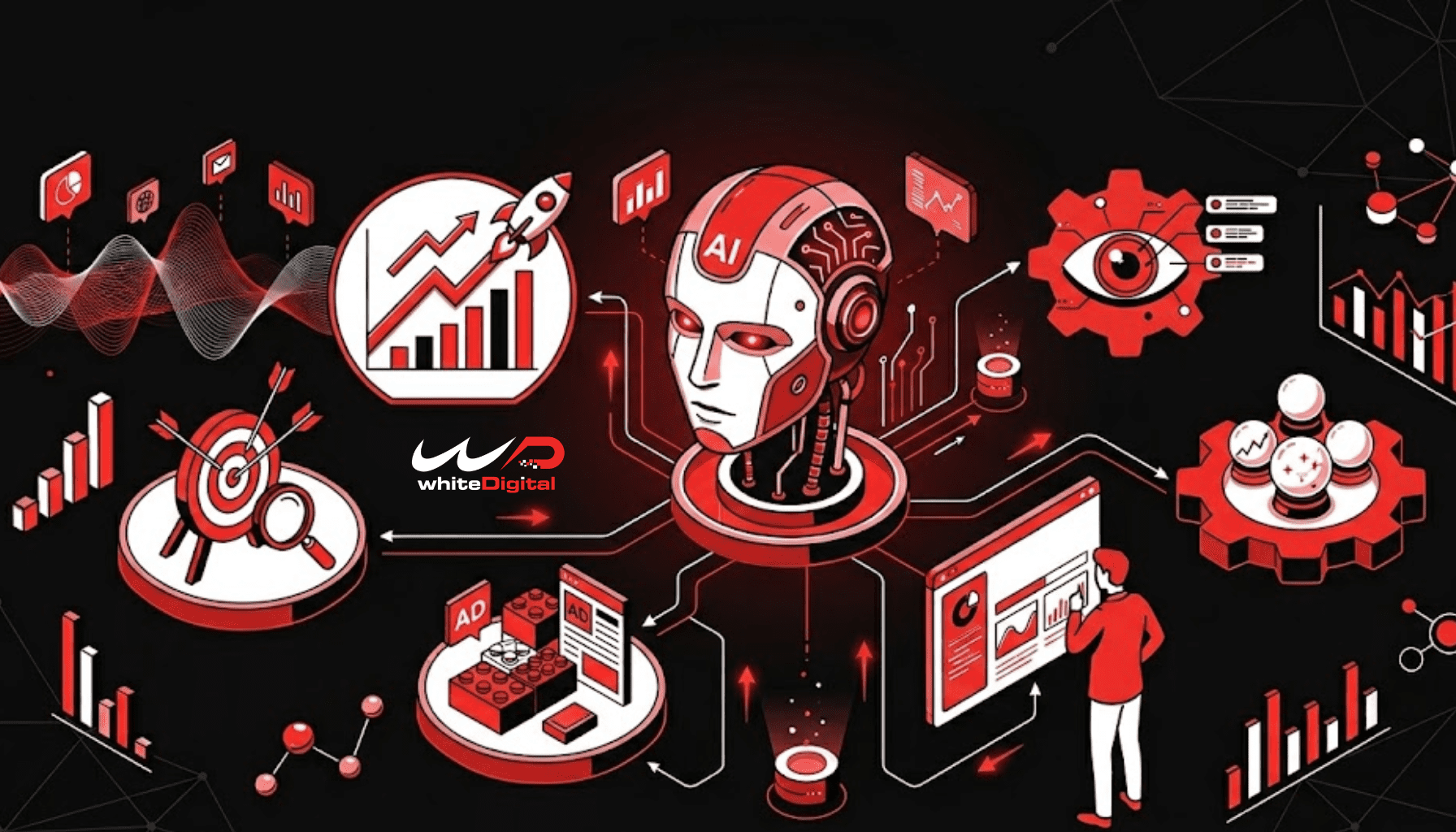
The new approach to PPC advertising is driven by Artificial Intelligence (AI)this year. Previously, PPC advertising was manual, keyword-based and very labour-intensive. Advertising has completely transformed into an AI-based “ecosystem”, meaning AI now drives all facets of PPC.
Rather than just providing a channel to serve ads, Google Ads is now an intelligent engine that learns, optimises, and scales all PPC campaigns at a rate that is impossible for an average human marketer to replicate.
With the transformation of PPC advertising due to AI, advertisers will need to understand and implement campaign strategies that require a greater understanding of how to collect, analyse, create, test, and optimise data for successful campaigns. As a result, successful PPC advertising is going to require less time for controlling and managing PPC campaigns than in the past.
Instead, successful PPC advertising will require the ability to provide the right inputs to the AI, enabling the AI to successfully manage and execute campaigns at scale.
From Manual to AI-Driven PPC Advertising
PPC advertising has evolved dramatically in the last couple of years. In the past, PPC marketers spent a significant amount of time researching keywords, adjusting bids, segmenting the audience, and manually testing various ad creatives. As of 2026, PPC marketers have now entrenched themselves in using machine learning algorithms to automate most of the tasks previously performed by PPC marketers.
Today, Google Ads analyzes an enormous amount of real-time data: user intent signals, behavioural activity, device type, and context. This means that Google Ads can make micro-decisions for each auction, creating a perfect match between the user and the ad with the optimal bid at that instant. The speed and accuracy of these decisions far surpass anything that can be done manually.
Marketers today are increasingly required to focus on strategy over execution and are less in control of every detail. Traditionally, advertisers were responsible for every part of a campaign, every detail. Now, the job of an advertiser is to set a clear goal, structure a campaign properly, and provide the AI system with high-quality input data to best optimise the performance of the advertisement.
AI in Google Ads: The Next Evolution in Campaign Types
The future of Google Ads is dominated by AI-driven campaign types like Performance Max, Demand Generation, and AI-enhanced Search campaigns. These are built to allow marketers to take advantage of automation across multiple channels at once while providing better performance than manual processes can provide.
Optimizing Budgets and Bidding Strategies with AI
Manual bidding strategies are becoming a thing of the past because of advances in artificial intelligence. By 2026, smart bidding strategies will be completely automated and will adjust bids in real-time based on numerous demographic and economic criteria.
Today, advertisers concentrate on creating performance goals, such as a CPA and ROAS goal and allow AI to take control of the bidding process after these performance goals are established, using ongoing performance data to continually refine the drive to maximize results. This leads to greater consistency & predictability in results.
Managing budgets has become much more dynamic. We no longer think of campaigns as separate budgets, but instead, AI determines how much different ad campaigns will perform and allocates ad dollars to the best-performing opportunities, allowing advertisers to realize more value out of their advertising without needing to constantly adjust ad spending manually.
First-Party Data And AI Utilization In PPC Marketing
Privacy restrictions and the demise of third-party cookies mean that first-party data has become the backbone of PPC advertising using artificial intelligence (AI).
First-party data consists of all the data collected directly from users, such as web activity, purchases, and CRM data. First-party data is highly valuable since it provides reliable and accurate insight into user behaviour.
AI systems rely on first-party data for targeting and bidding decisions. The lack of first-party data will dramatically reduce the value of AI. Therefore, advertisers that build comprehensive data collection systems will be able to effectively utilize AI.
Challenges of Using AI for PPC Advertising
AI in PPC advertising provides advertisers with benefits as well as limitations. One of the biggest limitations is that there lacks an understanding of how the AI makes its decisions (i.e., transparency). Similarly, Advertisers who have been manually optimizing have a challenge to trust in the automation of the system, and therefore, they may experience a perception of loss of control when automating their processes. If automation is not trusted or accepted, then performance may suffer due to a limit on what is accomplished through automation. In conclusion, advertisers will need to achieve a balance between trust and control.
A further challenge for advertisers using AI is dependency on data. Therefore, If data is not of good quality, or there is not enough of it, then an AI will produce poor optimization and wasted ad spend due to poor performance.
What This Means To PPC Advertisers
The position of PPC professionals has changed dramatically since 2015. These professionals are no longer managing campaigns, but now act as strategists overseeing AI delivery systems.
This change requires a different way of thinking. Advertisers must create precise goals, structure campaigns properly, and continually work on testing out new processes. Understanding how an AI-driven system operates and how you can change the outcome of the AI is one of your most important skills.
Collaboration between human competencies and machine technologies is one of the keys to success with AI.
AI completes the tasks assigned to it and marketers create the plans, concepts and strategies for executing these assignments.
The Future of AI Advertising
In the past, automated features in PPC advertising mostly saved advertisers time and effort, but with the evolution of AI, new use cases for automation will exist in addition to the current use cases.
Automation in creating or optimizing campaigns will continue to evolve through ongoing advancements in AI technology and will see the emergence of fully autonomous optimization of campaigns.
Conversational search and AI assistants will continue to gain popularity and functionality, fundamentally changing how advertisers are interacted with and how consumers will interact with the advertisements of advertisers. Advertisers will need to change how they advertise (including messaging, the formats of places where they advertise, and how they structure and run advertising) based on the behavioural changes of consumers that will take place in the short term.
The gap between advertisers who choose to use AI tools and those who do not will continue to grow as AI tools evolve and become more capable and sophisticated.
Wrap up
As it stands at the moment, Artificial Intelligence (AI) is changing PPC advertising as it currently exists in astounding ways. AI has made campaigns more intelligent, faster and much more effective than they ever have been/had been before. The use of AI’s advanced targeting abilities, automating bidding processes, providing predictive analytics and providing more personalized creative options than were ever possible has profoundly altered the digital advertising landscape.
Coming to an end, in order for marketers to continue to compete effectively in this new environment, marketers must do two things as a minimum. These things are developing a comprehensive strategy around their usage of AI methods as well as AI technology, obtaining and utilizing high quality data and adapting continuously to changes in technology.
Also, successful advertisers will not necessarily be those advertisers who focus solely on the use of AI methods and technologies exclusively to deliver their advertising, but rather they will be those advertisers who understand how to effectively use AI methods and technology as an additional avenue to obtain desired outcomes.