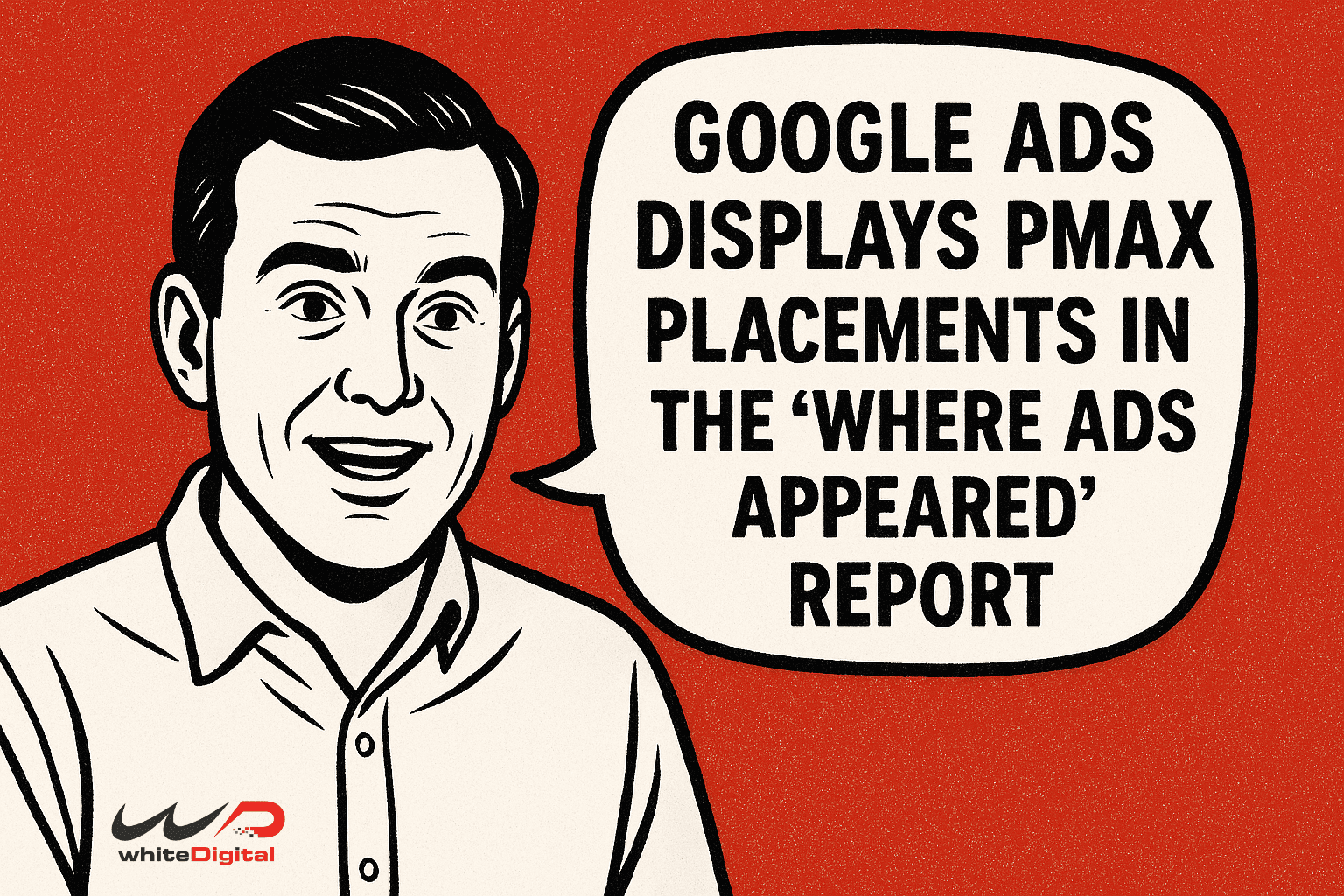
Google Ads has made an exciting change to Performance Max (PMax) reporting by adding the “Where ads showed” report, which allows advertisers to see where their PMax campaigns actually delivered ads, addressing long-standing frustrations since Google’s most automated campaign type became available.
PMax campaigns use Google’s full inventory of advertising channels (Search, Display, YouTube, Discover & Gmail and partner networks) to distribute and deliver ads using a set of machine learning algorithms.
While the use of automation provides advertisers with both scale and efficiency, PMax campaigns have been criticized as acting like a “black box.” Until recently, PMax campaigns did not provide advertisers with the ability to see any form of visibility to actual ad placements.
As a result of this change, the new “Where ads showed” report allows marketers to see the actual placements of impressions across all networks and placements for PMax campaigns. The addition of this report offers marketers the ability to analyze their spending against various placement channels and gives them a much clearer understanding of how their budgets are used.
With this new transparency, advertisers will be able to identify performance trends in addition to relying solely on high-level metrics such as conversions or return on ad spend (ROAS).
For advertisers prioritizing brand safety, budget efficiency and performance optimization, this update is a major plus. By analyzing placement information, marketers can spot underperforming and low-quality environments and develop corrective actions such as refining audience signals, enhancing creative assets, modifying conversion targets, or excluding placements from the campaign that do not align with objectives.
For agencies and advertisers running with very big Google Ads PMax budgets, this knowledge offers them insight as to how to manage their large budgets while balancing both automation and control to utilize both machine-learning optimization from Google and make decisions based upon informed data.
Also of importance, this update enables advertisers to be able to clearly explain the results of a campaign to stakeholders by identifying where visibility and engagement originated.
This update is part of a larger trend by Google to incrementally provide greater transparency in automated campaigns as they have responded to requests from advertisers for channel-level performance insight, search term themes, and now placement visibility over time. PMax remains a heavily automated process, but because of updates like this, we can now develop confidence in marketers to trust and grow the PMax format with ease.
Overall, the addition of Performance Max placement data to the “Where ads showed” report marks a meaningful step forward. It gives advertisers the visibility they need to optimize smarter, protect brand value, and extract stronger returns from one of Google Ads’ most powerful—and previously opaque campaign types.