
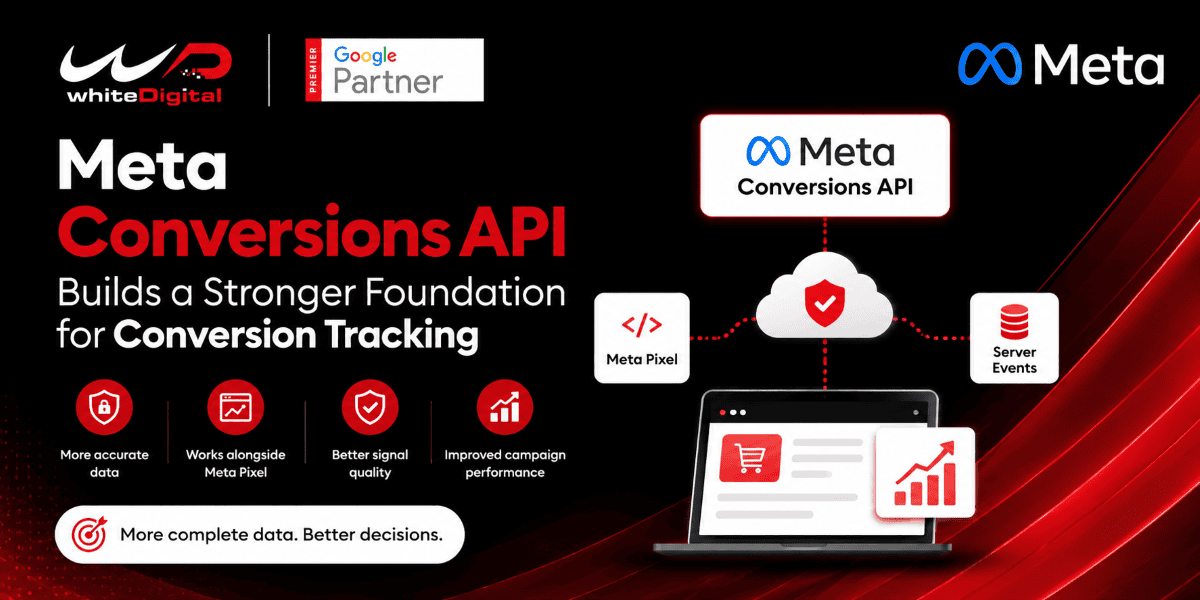
If you are an advertiser running Meta Ads, tracking clicks and impressions alone is not enough to understand campaign performance. It is necessary to look at conversion data to know if the campaign is producing leads, sales, or other valuable actions.
This is where Meta’s Conversions API, called CAPI, becomes useful. It works alongside the Meta Pixel to send website events to Meta, helping advertisers build a base for conversion tracking and campaign measurement.
For advertisers who manage Meta Ads campaigns, the Conversions API can improve event matching. Provide extra signals that aid ad delivery and optimization. Accurate conversion tracking then becomes a part of measuring and improving campaign performance.
Why I Would Not Rely Only on the Meta Pixel
The Meta Pixel is still a part of website tracking. I can use it to measure actions such as page views, leads, purchases, and add-to-cart events. However, browser-based tracking does not always capture every event. Browser restrictions, connectivity problems, and other technical issues can affect the data that reaches Meta.
That is why I see the Conversions API as a layer rather than a replacement for the Pixel. Depending on one tracking method, I can use both: Meta Pixel uses browser-based event tracking, while the Conversions API sends event data through server-side or other direct integrations.
How Conversions API Helps Meta Campaign Tracking
One of the reasons I would consider the Conversions API is the quality of the data being sent to Meta. When Meta receives reliable event information, it has better signals to understand what actions people are taking after interacting with an ad. This can support campaign optimization and measurement.
For example, if I am running a lead-generation campaign, I don’t just want to know that someone clicked my ad. I want to know whether that person eventually completed the lead form. The more complete the conversion information is, the easier it is for me to evaluate the campaign beyond simple click metrics.
Meta CAPI Improves Event Matching
Another part I find useful is Event Match Quality. Conversions API events can include information that helps Meta match an event to the person who interacted with the ad; better matching can give Meta stronger signals for optimization.
For me, this is important because conversion tracking is not just about collecting more events. The match quality of those events also matters. I would therefore look at the Conversions API as part of a broader measurement setup rather than treating it as simply another tracking tag.
Accurate event counting
One concern I often see with adding tracking methods is duplicate conversions. For example, imagine a customer completes a purchase. The Pixel records the purchase, and the Conversions API also sends the purchase. If both systems simply counted the event independently, the reporting could show two purchases when there was actually only one.
Meta uses event deduplication to help prevent this. When the browser and server send information about the same event, Meta can recognize the duplicate and count the event once rather than counting it twice. That makes the combination of Pixel and the Conversions API much more practical for advertisers.
Support for all standard web events
Common website actions such as page views, leads, purchases, and add to cart can be tracked through standard events. This is particularly useful for both e-commerce and lead-generation campaigns.
For an e-commerce client, I may be interested in purchases and add-to-cart actions. For a service-based client, I may focus more on leads, contact form submissions, calls, or other actions that show interest. The tracking setup can then be aligned with the actual campaign objective.
Better Data Foundation for Meta Ads
For me, the biggest takeaway is simple: the Meta Pixel and Conversions API don’t have to compete with each other. They can work together. The Pixel provides browser-based event tracking, while the Conversions API gives advertisers another way to share conversion events with Meta. When the setup is implemented correctly, deduplicated, and regularly checked, it can provide a foundation for campaign measurement and optimization.
How to Implement Meta Conversions API Alongside the Meta Pixel
If I were setting up the Conversions API for a client, I would not remove the existing Meta Pixel. I would keep the Pixel in place. Add the Conversions API alongside it.
First, I would make sure the Meta Pixel is correctly installed and that the important website events are firing properly. Depending on the business, these could include Page View, Lead, Purchase and Add to Cart.
Next, I would connect the Conversions API through the client’s setup. The exact implementation can vary depending on the website platform and technology stack. If the client’s website supports a Meta partner integration, which is a ready-made connection between Meta and a supported website or e-commerce platform, I would use that option because it can simplify the setup. If a suitable partner integration is not available, I would work with a developer to set up a server-to-server connection with the Conversions API.
Once the connection is available, I would configure the important events that I want to send to Meta. For example, an e-commerce website may send Purchase and Add to Cart events, while a service-based website may focus more on Lead, Contact Form Submission, Phone Call, Appointment Booking, and other important enquiry actions.
Once both tracking methods are connected, I would make sure the same important events can be matched correctly between the browser and server. This is where event deduplication becomes important. I would use the event identifiers so Meta can recognise when the Pixel and Conversions API are reporting the same conversion rather than treating them as two separate conversions.
After implementation, I would go into Meta Events Manager. Check whether the events are being received correctly. I would review the event status, event matching, and any warnings before relying on the data for campaign optimization. Only after I confirm that the events are being received correctly and duplicate events are being handled properly would I use those conversions for campaign optimization.
What This Means for Advertisers
From my perspective, the Conversions API is less about adding another complicated tracking system and more about creating a stronger data foundation. When I manage Meta Ads for a client, I want to make sure the platform receives useful conversion signals. I also want reporting to be as accurate and consistent as possible.
That means I would first make sure the Pixel is implemented correctly. Then I would look at whether Conversions API can complement the existing setup. I would also check event matching, deduplication, and the actual business events being passed to Meta rather than assuming that simply enabling the Meta Conversions API (CAPI) automatically fixes every tracking problem.
For advertisers, this means spending less time questioning whether the conversion data is complete and more time using that data to make better campaign decisions.
Final Thoughts
I don’t see the Conversions API as a magic solution that guarantees every conversion will be tracked. Instead, I see it as an important part of a more resilient Meta Ads measurement setup. If I am managing Meta campaigns where lead quality, purchases, and return on ad spend matter, I want the ad platform to receive the best possible conversion signals. Using the Meta Pixel together with Conversions API can help create that stronger foundation. Good tracking is still about implementation, testing, and regular checking.
Need help with your Meta Ads tracking? Contact us to review your Meta Pixel and Conversions API setup.