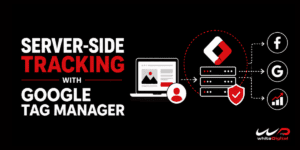
Meta has released an official template for the Pixel available in Google Tag Manager (GTM), giving advertisers an easy way to set up conversion tracking without the need for custom code or third-party templates.
The new template is designed to simplify the setup process for brands and agencies that use Google Analytics 4 with GTM to manage their website tracking.
Setting up the Meta Pixel in GTM in the past required creating custom HTML tags, adding the appropriate event parameters manually, and then fixing any broken triggers after every update to the website. Different teams would often create different workarounds, which resulted in duplicate tracking, missing conversions, and inconsistent reporting between Google and Meta Campaigns.
The new official template simplifies this process. This will save time and cost from building each separate event from scratch. Advertisers can use the Meta Pixel to connect to the corresponding GA4 data layer which already uses Google Analytics tool.
Existing events, like a purchase, add to cart, viewed content, and start checkout, can automatically populate Meta’s analytics with no need to create separate tags for each platform.
There is one major advantage of implementing the most enhanced ecommerce event, GA4 for Meta. This will automate mapping to the corresponding event.
If a website has already been tracking fundamental actions (e.g., Purchase, Add to Cart, View Content, and Initiate Checkout) using GA4, then those events can now be configured to work with Meta campaigns and will significantly reduce the amount of manual setup involved. There will be no duplicated event logic for advertisers as GA4 to Meta will use the event logic from GA4.
In addition, for agencies managing many clients, this new template could save a significant amount of time because they can use the same basic setup across all accounts instead of having to create a custom pixel setup for every individual GTM container. This also reduces the possibility of making configuration mistakes and makes it easier for teams to maintain their campaign tracking over time.
Additionally, this update could improve how accurately advertisers can attribute conversions to Meta. With cleaner event tracking, Meta will receive better quality conversion data, which will allow its algorithm to perform better during the optimization process. Advertisers who are running both Google Ads and Meta Ads should experience greater levels of consistency across both platforms as both will be using the same underlying event structure.
However, even though the setup is easier, advertisers will need to thoroughly test their tracking since the new official template does not negate the need for proper triggers, data validation, consent settings, and debugging.