
Search advertising is becoming more automated with AI keyword matching, automatic ad creation, and dynamic landing pages among other methods provided by Google Ads and Microsoft Advertising to enable advertisers to connect with potential customers with less effort required to manage campaigns manually.
Nevertheless, increased automation doesn’t necessarily imply increased control, as advertisers will still have to be aware of how the search terms triggering ads are selected, how the messaging is created, where users land, and whether the spend brings value to the bottom line of the business.
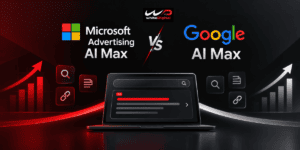
Max for Search from Google’s AI and Max from Microsoft’s AI are two key innovations in this respect. They both seek to enhance the search reach and relevancy, but the controls, reporting, and implementation vary.
Thus, which one provides more control over the automated search campaigns? It all depends on what needs to be controlled.
How Google Ads and Microsoft Advertising Automate Search Campaigns
The AI Max for Search feature from Google Ads aims to go beyond the conventional approach of keyword targeting in order to optimize the creative part of advertisements. The features of this tool include search term matching, text customization, and final URL expansion. In addition to these, advertisers have options like brand control, targeting options for locations, URL control, and asset reporting in order to deliver their campaigns.
Similarly, Microsoft Advertising’s AI Max aims to deliver similar functionality to the standard search campaigns. It does so through search term matching in order to determine relevant queries, text customization in order to produce more messaging, and final URL expansion in order to redirect users to relevant pages on their websites.
Both the tools aim to use AI to understand the intent of searches and match the searches with relevant ads and landing pages.
The major difference between the two platforms is that advertisers are not relieved of any responsibilities by them.
- Keyword Targeting: How Much Control Do Advertisers Retain?
Traditional search advertising gives much flexibility with regard to choosing keywords, match types, negative keywords, and management of the campaign in general. There is an approach known as AI-matching, which uses additional contextual cues to identify relevant searches.
Google AI Max uses current keywords, creative, website content, and other signals to provide additional matching options. Advertisers can see search term reports and use brand controls and URL restrictions to deliver ads.
Microsoft AI Max also helps to extend the reach beyond current keywords. Information is provided in reports on AI-optimized matches negative keywords, term exclusions and brand inclusions/exclusions help advertisers to control campaign relevance.
Which one gives more control?
Both options give good opportunities to control automatic matching. What really counts in this case is that advertisers can analyze search terms, find irrelevant traffic, and exclude it.
Advertisers in highly regulated industries or with little commercial purpose for their campaign need to try extended matching carefully. Extended matching does not make sense if the extended reach includes irrelevant search terms for the business.
- AI-Generated Ad Copy: Is Brand Consistency Possible?
Automated creativity is expected to result in savings of time on the creation of different types of advertisements. At the same time, there is a risk that AI-generated messages would not be conveying the right message, offer or promise from the brand.
Google AI Max allows for text customization and asset optimization. Marketers are allowed to check the effectiveness of generated assets and remove those that do not fit their criteria.
Microsoft AI Max allows for generation of more message variations by using existing advertising assets and website copy. Asset reporting helps to compare AI-generated messages with those created by advertisers. Microsoft AI has term exclusions that allow advertisers to exclude certain words from generated content.
These efforts give some level of control but do not eliminate the need for review.
For instance, the financial services advertiser would need to avoid making any performance claim that is not supported. The e-commerce firm may need to make sure that the promotional language used reflects the current price and availability of products.
Advertisers should set guidelines for their brands, review the generated assets, and determine if variations in creative are leading to higher qualified conversions.
- Landing Page Selection Automation vs. Manual Choice
The third campaign element in which the use of automation could make a difference concerns the choice of landing pages.
Through the “Final URL Expansion” option available in Google Ads, one can automatically direct traffic to relevant landing pages without necessarily choosing one particular landing page. However, according to the official Google documentation, final URL expansion can affect pinned responsive search ads assets.
Microsoft AI Max also employs the Final URL Expansion feature to redirect users to more relevant pages according to their intent. The search term landing page report of Microsoft AI Max allows advertisers to know which URLs get traffic.
The advantage of the practice is obvious: users can be directed to a more relevant page about the product/service/information without having to make an ad group for each query variation.
However, there is also a significant risk: the automated system might direct users to a relevant page according to the query but not good for conversion/outdated/non-consistent with the ad page.
Advertisers need to audit expanded landing pages, check tracking parameters, and exclude undesired landing pages.
- Budgets and Bidding: Who Controls the Spend?
Automated processes do not mean that the advertiser transfers all their budget to the advertising system.
There is an automated bid optimization process available in Google Ads and Microsoft Advertising that optimizes bids for various targets, including conversions and conversion values. It is important to note that even though advertisers have different levels of control over bidding, they always have budgets and targets.
Microsoft Advertising’s AI Max will honour the current budgets and bidding strategies of your Search campaigns. Google’s AI Max works within the parameters of your campaign, although Google has warned that AI Max will not work effectively in instances where a campaign is limited by budget.
The critical point here is the difference between having spent control and control over how the spend is allocated.
Advertisers can set up budgets and performance goals, but the automated system will allocate resources to the available opportunities as per the set parameters. Marketers need to keep track of costs per acquisition, return on ad spend, conversion value, and marginal performance.
- Reporting and Transparency: Can Advertisers Understand What AI Is Doing?
Reporting becomes necessary when decisions regarding the campaigns are getting automated.
Google AI Max gives the search term insights, asset performance report, and information on why the ad matched certain terms. Microsoft AI Max provides the AI-optimized match type label, asset report, and search term landing page report.
Advertisers can know how automation impacts their targeting, messaging, and destination URL.
However, knowing the platform activities does not necessarily mean that the campaign is getting incrementally better performance. The campaign might be getting more conversions because it has been able to fulfil demand that would have been converted via other channels.
It is important for advertisers to compare AI-enabled campaigns to control campaigns, have a consistent definition of conversions, and see lead quality or revenue if possible.
It is important to know how the changes made by the AI impacted the business results.
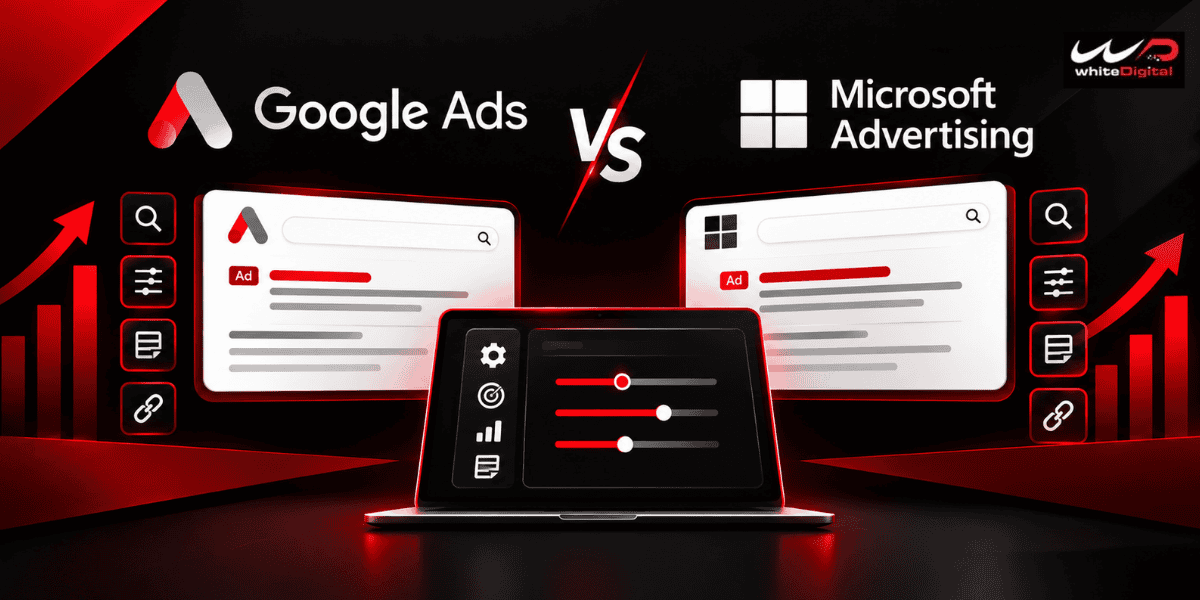
Google Ads vs. Microsoft Advertising: Which Offers More Control?
Neither is automatically superior to the other. They both offer a combination of automation along with controls that enable the advertiser to control campaign actions.
For example, Google provides advanced controls in AI Max in the form of search terms, assets, brands, and exclusion of URLs. Likewise, Microsoft also provides similar services through their AI Max suite of tools that include AI optimized matching labels, landing pages, brand controls, and exclusion of search terms.
The ultimate consideration would be which platform would serve best the needs of the advertiser in terms of their account structure, audience, conversions, reports, and objectives.
Instead of choosing the platform that has the better AI options available, the advertiser should be looking at the quality of its controls. Can the team quickly spot irrelevant searches? Can the team avoid sending unsuitable messaging? Can they restrict landing pages? Can they measure incremental conversions?
All these make for better comparison criteria than feature count.
The Bottom Line
Google Ads and Microsoft Advertising are adopting an almost identical strategy of leveraging AI to manage search campaigns.
Coming to an end, however the real competitive edge will not result from the automation but rather from its synergy with transparency, control of advertisers, and measurable results.
As a PPC professional, the optimal strategy here is to run tests on both systems based on one’s campaign goals. The system that can provide more qualified and incremental conversions at an acceptable cost, with enough control, deserves more funding than the other.