
When I run Google Ads campaigns, I don’t just look at clicks and impressions. I also want to know how many leads or sales my campaigns bring in and if Google is getting the data to make the campaigns better.
That’s why the latest Demand Gen update from Google caught my attention. It came out on October 13. The update is about making data better, improving how conversions are measured, and helping advertisers see the value of their data setup clearly.
For advertisers using Google Ads, the main point is easy to understand: better conversion data helps Google get an idea of how campaigns are doing. This can lead to optimization.
Google Ads Introduces the Data Strength Uplift Metric
One of the changes is the Data Strength Uplift metric. It is now available in the Google Ads interface. The goal of this metric is to help advertisers see how many more conversions they get because of their data setup.
Imagine running a Demand Gen campaign that brings in leads. If some of the conversions aren’t captured properly, the reports might not show the story.
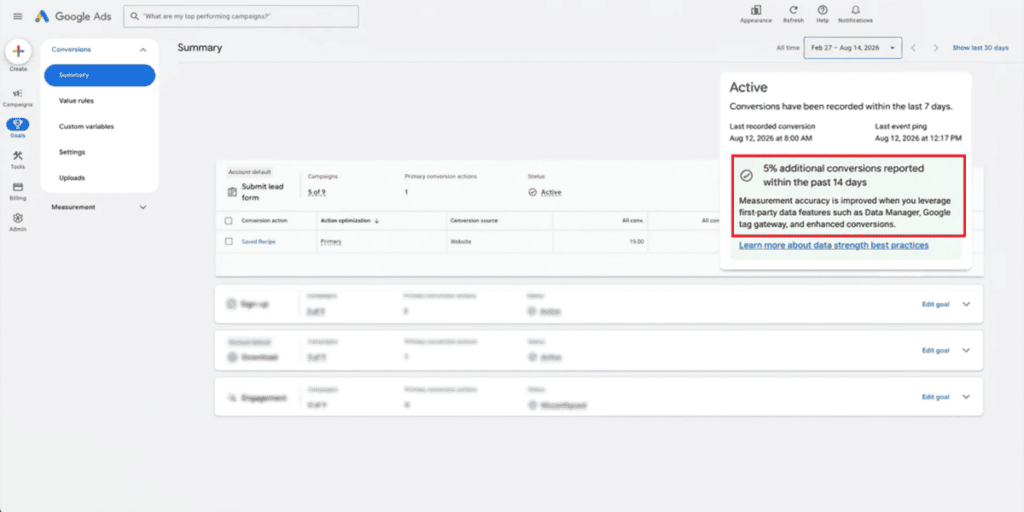
This new metric helps advertisers see how their data setup affects how conversions are measured. It gives another sign to look at when checking account performance and deciding if changes are needed.
Better measurement can bring back conversions that were missed before. It doesn’t mean creating business just getting a more complete picture.
Google Tag Gateway Can Support Better Conversion Measurement
Google also talks about Google Tag Gateway as part of its plan to improve data strength.
Google Tag Gateway lets website measurement tags come from the advertiser’s domain. This can help collect measurement signals. How much it helps depends on the website setup, browser rules, and what users agree to.
According to Google’s tests, advertisers who use Google Tag Gateway see an average increase of more than 20% in conversions for Demand Gen campaigns.
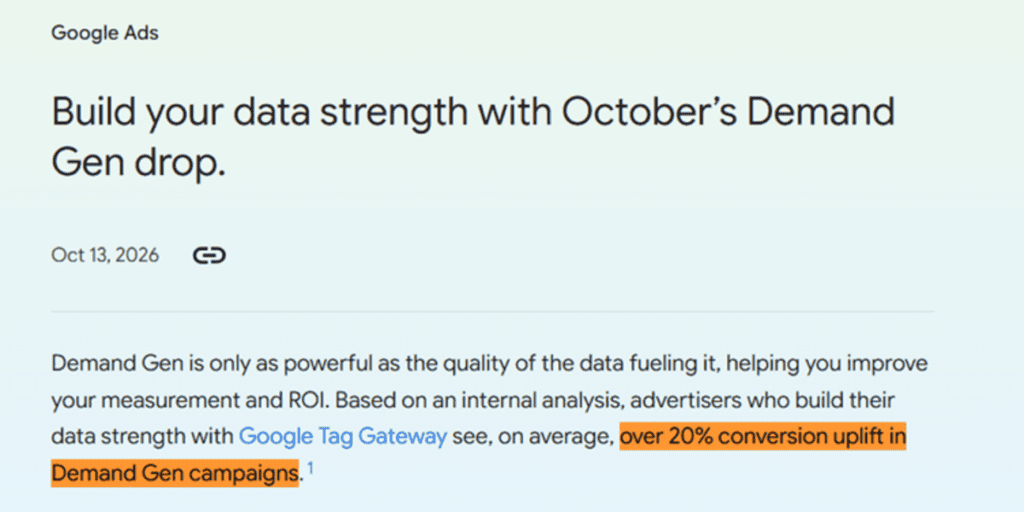
That figure is worth noting, but it is not a guaranteed result for every advertiser. Actual outcomes depend on the existing tracking setup, campaign activity, and business circumstances.
To access it, sign in to Google Ads, open Tools, select Data Manager, and go to Google Tag. Click Manage, open the Admin tab, and look for Google Tag Gateway for advertisers to start the setup.
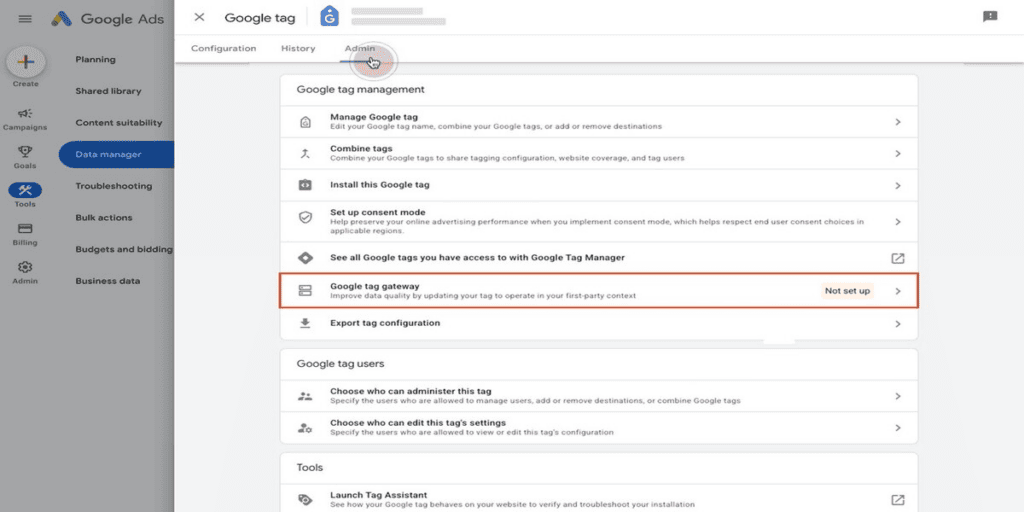
For advertisers, the practical step is to review how conversion tracking works before making changes to the campaign.
Data Manager Expands to Google Analytics and Display & Video 360
Google is also expanding Data Manager to Google Analytics, a platform that helps advertisers understand website traffic and user activity, and Display & Video 360 (DV360), Google’s platform for managing digital advertising campaigns across websites, apps, and video inventory. This change makes it easier for advertisers to connect and manage their first-party data.
First-party data can be things like what customers do on a website, what they do in an app, or data from a company’s CRM system.
For instance, a company might get leads through a website. Then later find out which of those leads became paying customers. Linking that data helps advertisers see more than the first time someone filled out a form.
For Google Ads advertisers, this shows how important it is to have data connections and to use conversion actions that really matter. Not every form submission is equally important. Some might not help Google tell the difference between a lead and a poor one.
Google has announced this expansion, but the new Data Manager interface may not yet be available to every advertiser as the rollout progresses.
Enhanced Conversions Are Coming to Google Analytics and DV360
Another part of the announcement is the planned availability of enhanced conversions in Google Analytics and DV360.
Enhanced conversions use appropriately handled, hashed first-party customer data to improve conversion matching and measurement. They can help advertisers understand more of the customer journey when some conversion signals are otherwise difficult to match.
For example, someone might interact with an ad on one device and complete a valuable action later. Depending on the implementation and available signals, enhanced conversions can help improve the measurement of that activity.
Google says the feature will soon be available in Google Analytics and DV360. Advertisers should check Google’s official documentation for rollout and implementation details before assuming it is available in their accounts.
What Google Ads Advertisers Should Review
I would use this update as a reason to review the foundation of my campaigns rather than immediately change the budget or bidding strategy.
Here is a thing to check:
- Make sure important actions like purchases, good leads, and phone calls are tracked properly.
- Look at whether Google Tag Gateway works for your website and your conversion tracking needs.
- Check if your CRM, website, and offline data can be linked correctly.
- Make sure the conversions you use for campaign optimization show business results.
- Ensure that data collection and sharing follow the rules for consent and privacy.
These steps are especially helpful for advertisers who run Demand Gen campaigns. Reliable conversion signals can make a difference in how well the campaigns work and how well automated bidding performs.
Better Data Matters, but It Is Not the Whole Strategy
Google’s October Demand Gen update puts data quality and measurement in the spotlight. The Data Strength Uplift metric, Data Manager expansion, and planned enhanced conversion availability all point toward a stronger data foundation for advertising.
Still, better tracking alone will not fix an irrelevant offer, weak creative or a landing page that fails to convert visitors. For Demand Gen campaigns, Google Ads Asset Studio also gives advertisers a way to turn existing social assets into video ad creatives.
I would treat this update as an opportunity to improve how campaign results are measured and how useful conversion information reaches Google’s systems. Alongside that, I would continue reviewing the audience, creative, landing page, and actual business outcomes.
For Google Ads advertisers, the goal is not simply to report more conversions. It’s about measuring meaningful results better, and using that to make better decisions about the campaign.
Want to get more value from your Google Ads data? Connect with the WhiteDigital team to strengthen your conversion tracking, make sense of campaign performance, and turn better insights into smarter advertising decisions.